Document Explorer
Overview
The Document Explorer is the primary navigation panel of the OmegaAI Document Viewer, located on the left side of the interface. It gives users a structured view of all studies and documents associated with a selected patient, and provides tools to create, manage, and review reports from a single location.
Interface Layout
The Document Explorer panel is located on the left side of the Document Viewer interface. The top portion of the panel contains two sections — Patient Card and Patient Documents — and a Studies section at the bottom. Click the toggle arrow on the right edge of the panel to collapse or expand it.
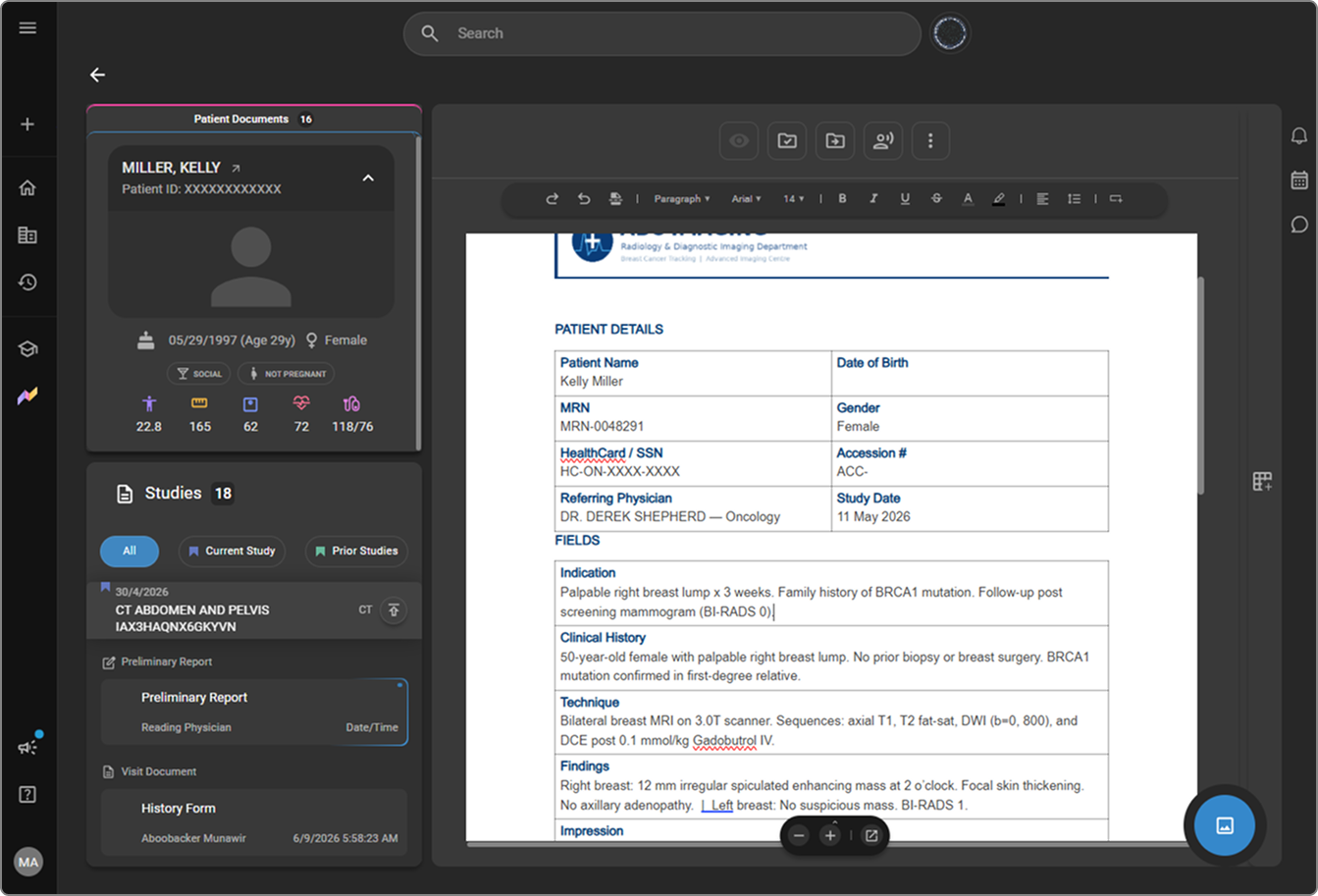
Patient Card
The Patient Card section is open by default when the Document Viewer is launched. It displays key information about the selected patient:
|
|
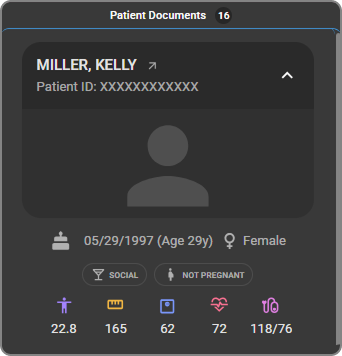
Note: To edit patient key indicators, go to the Patient Key Indicators section on the Order page.
Patient Documents
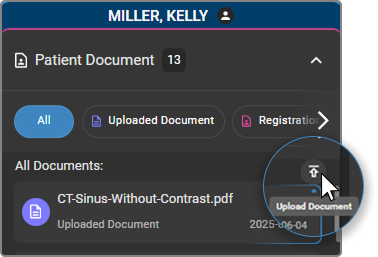
Clicking the Patient Documents section hides the Patient Card and opens the document panel. The section header shows the total document count.
Patient Document
Lists all documents associated with the patient. Use the filter tabs to narrow the list. The tabs are scrollable — click the arrow on the right to reveal additional tabs:
|
|
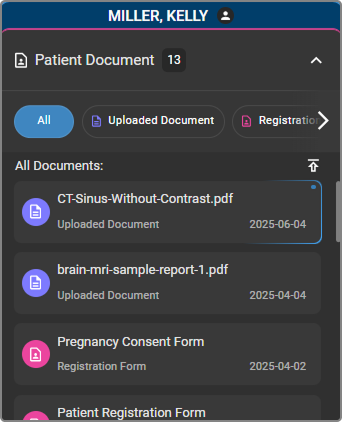
Each document entry shows the document name, type, and date. Click any document to open it in the viewport. Hovering over a document reveals additional options:
|
|
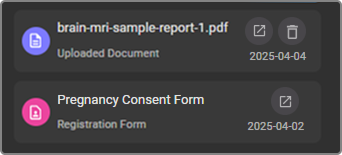
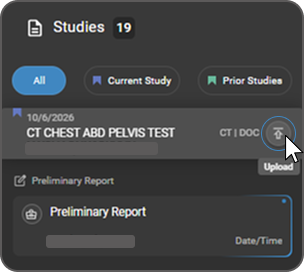
To upload a new document, click the upload icon at the top right of the document list, or drag and drop a file into the upload area when the Uploaded Document tab is selected. |
|
Studies
The Studies section is fixed at the bottom of the panel and lists all studies associated with the patient. The section header shows the total study count.
Studies are organized using three tabs:
|
|
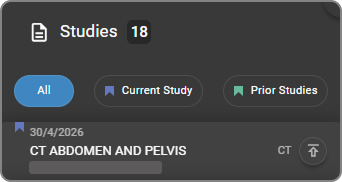
Each study card displays the study date, study name, accession number, and modality. Hover over the study card to reveal the action buttons:
|
|
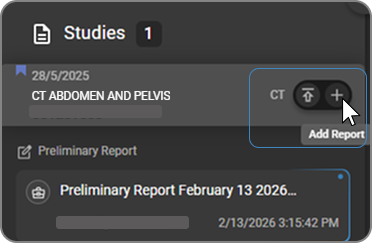
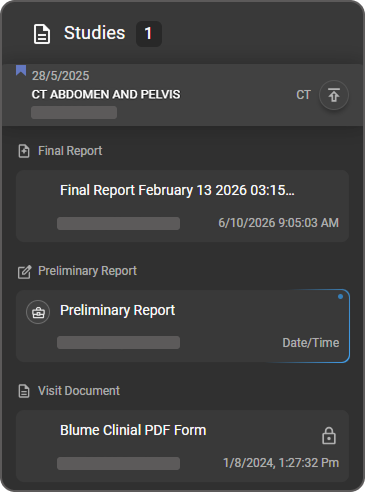
Documents associated with a study are listed below the study card, grouped by type:
|
|
Working with Reports
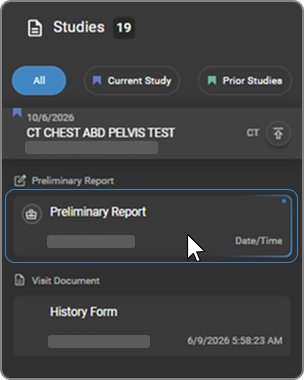
Creating a Preliminary Report
|
|
Signing and Finalizing a Report
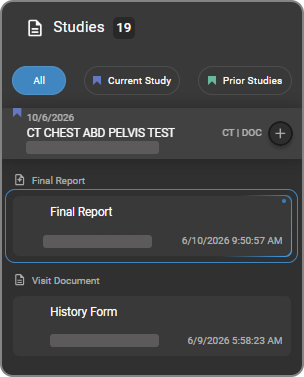
Reports are signed by clicking the Done or Done & Open Next button in the Document Viewer. The behavior depends on the user's role and the setup being used.
Done
Clicking Done signs the report and returns the user to the worklist:
| Setup | Behavior |
|---|---|
| Single Screen | Signs the report and redirects to the worklist in the same window. |
| Multi-Monitor | Signs the report and redirects to the worklist on the monitor where it was originally displayed. |
| Embedded Document Viewer | Signs the report and redirects to the worklist within the application. |
Done & Open Next
Clicking Done & Open Next signs the current report and immediately opens the next available study from the worklist:
| Setup | Behavior |
|---|---|
| Single Screen | Signs the report and opens the next study in the same window. |
| Multi-Monitor | Signs the report and opens the next study across both monitors (Image Viewer and Document Viewer). |
| Embedded Document Viewer | Signs the report and loads the next study automatically in both the Image Viewer and Document Viewer. |
Sign behavior by role
The outcome of clicking Done varies by user role:
| Role | Outcome |
|---|---|
| Reading Physician / Performing Physician | Report is signed off automatically if the user has sign-off permission in UAC. |
| Performing Technologist | If the study status is Completed, the study transitions to Verified automatically. |
Uploading a Report or Document
|
|
|
|
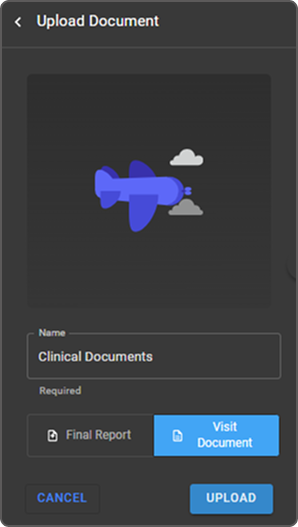
Supported file types
In addition to standard document formats, the following image formats are supported: .jpg, .jpeg, .png, .bmp, .tiff, .tif, and .gif.
Uploaded images are automatically converted to PDF.
Pop Out Report
|
|
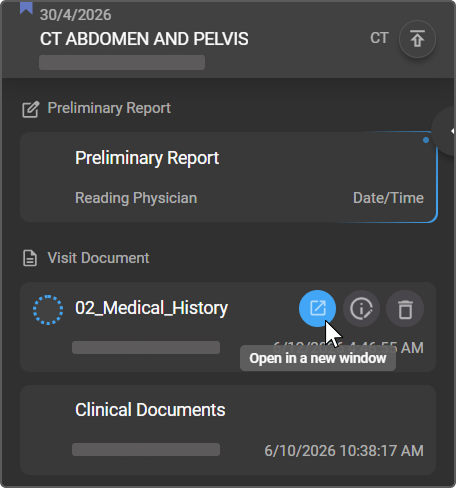
Documents open in a lightweight PDF viewer with a toolbar that includes zoom out, zoom level selector, zoom in, download, and print.
Note: Download is available for final diagnostic reports and all non-report document types. The pop-out option is not available for preliminary diagnostic reports or Blume forms.
Creating Multiple Reports
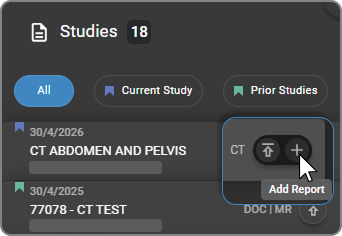
Once a preliminary report is finalized, a + button appears on the study card. A study can have more than one report. To create an additional report:
|
|
Renaming Reports
Report titles can be changed from their system defaults at any stage, subject to the report's current state.
Reports are created with the following default titles:
- Preliminary Report
- Final Report
If no changes are made, default names are retained automatically.
Renaming a Preliminary Report
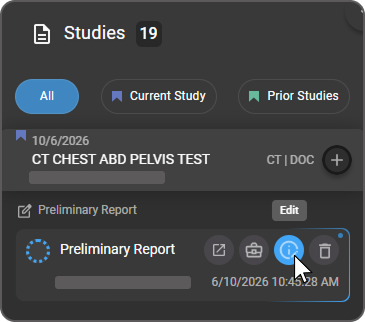
You can rename preliminary reports at any time. The custom name is retained when the report is finalized.
|
|
|
|
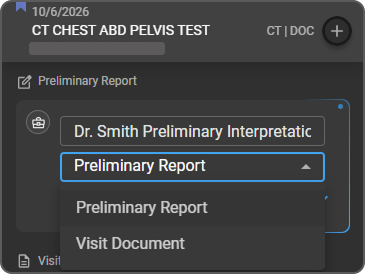
Renaming a Final Report
Final report titles are locked once the report reaches the Final state. To rename a final report:
-
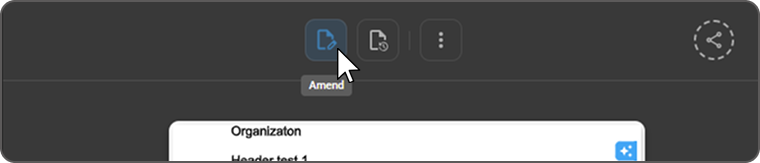
Place the report into the Amendment workflow.
-
Once in amendment, hover over the report card. The Edit button becomes available.
-
Type the new name directly in the name field. Dropdown options are not available during amendment.
-
Click ✓ to save or ✕ to cancel.
Linked Patient Records
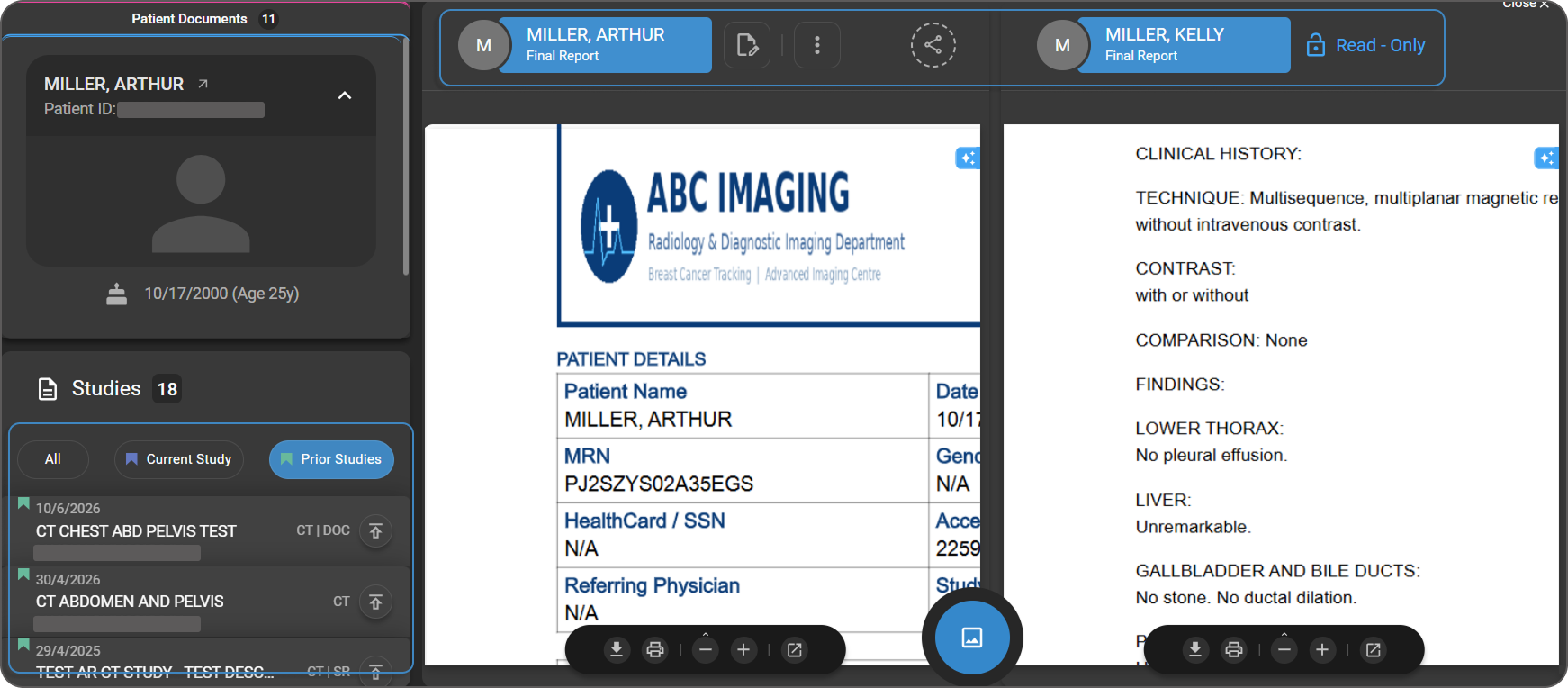
When a patient has linked records, their associated studies appear as prior studies in the Document Explorer, including all associated reports.
- Open the study in the Document Viewer.
- Navigate to the Prior Studies tab. Linked patient studies are listed here along with all their associated reports.
- Open a linked report. The linked patient's name is displayed in the viewport for clear identification.
- Switch between the primary patient record and linked patient records to compare studies.
Report Access Indicator
The Report Access Indicator prevents simultaneous editing of the same report by multiple users. When a report is opened for editing, it is locked automatically and all other users are notified.
How Locking Works
A report is locked as soon as it is opened for editing. This occurs when a user opens an existing preliminary report or creates a new one using the Add Report (+) button.
When a report is locked:
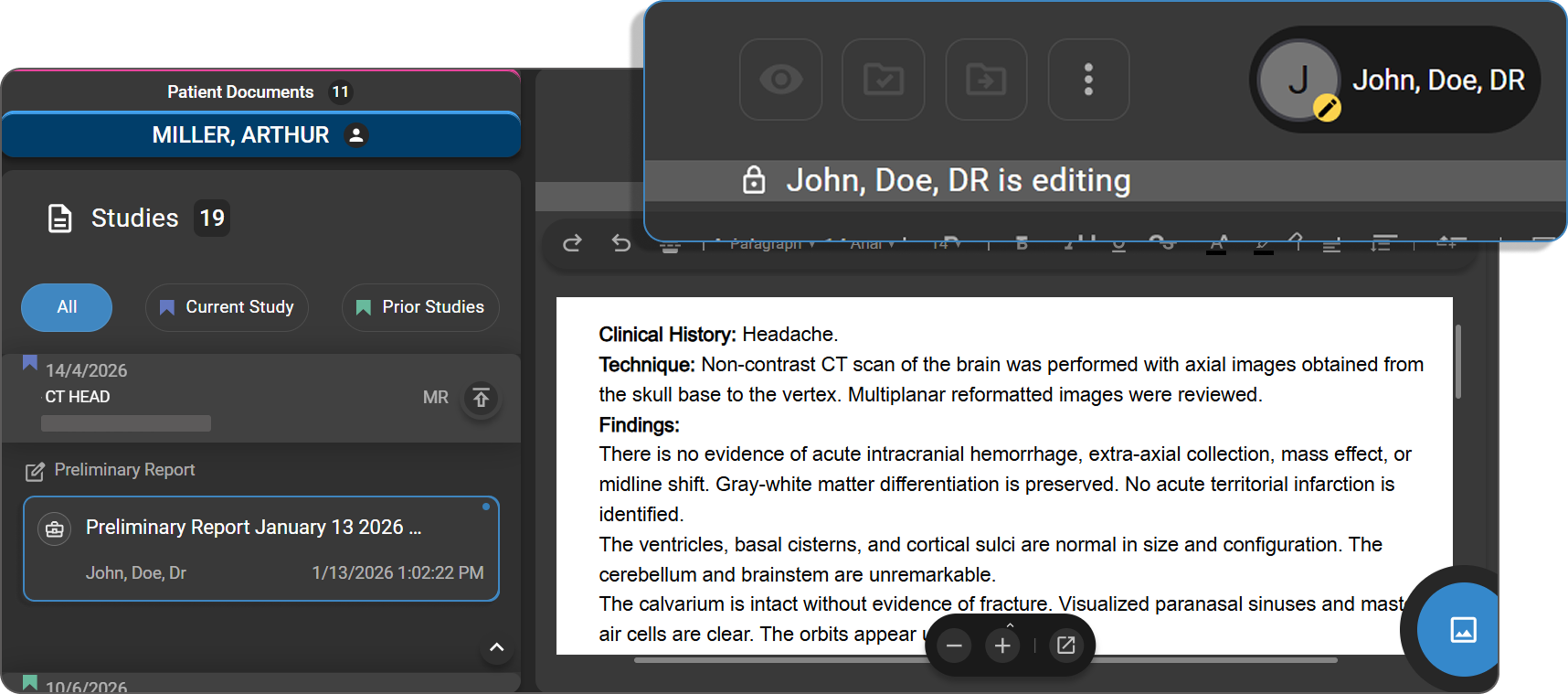
- A lock icon appears on the report card in the Document Explorer.
- The active editor's name and avatar are displayed in the top right corner of the viewport.
- Other users cannot create or upload new reports for the same study.
- All report action buttons are disabled for other users.
Editing Indicators
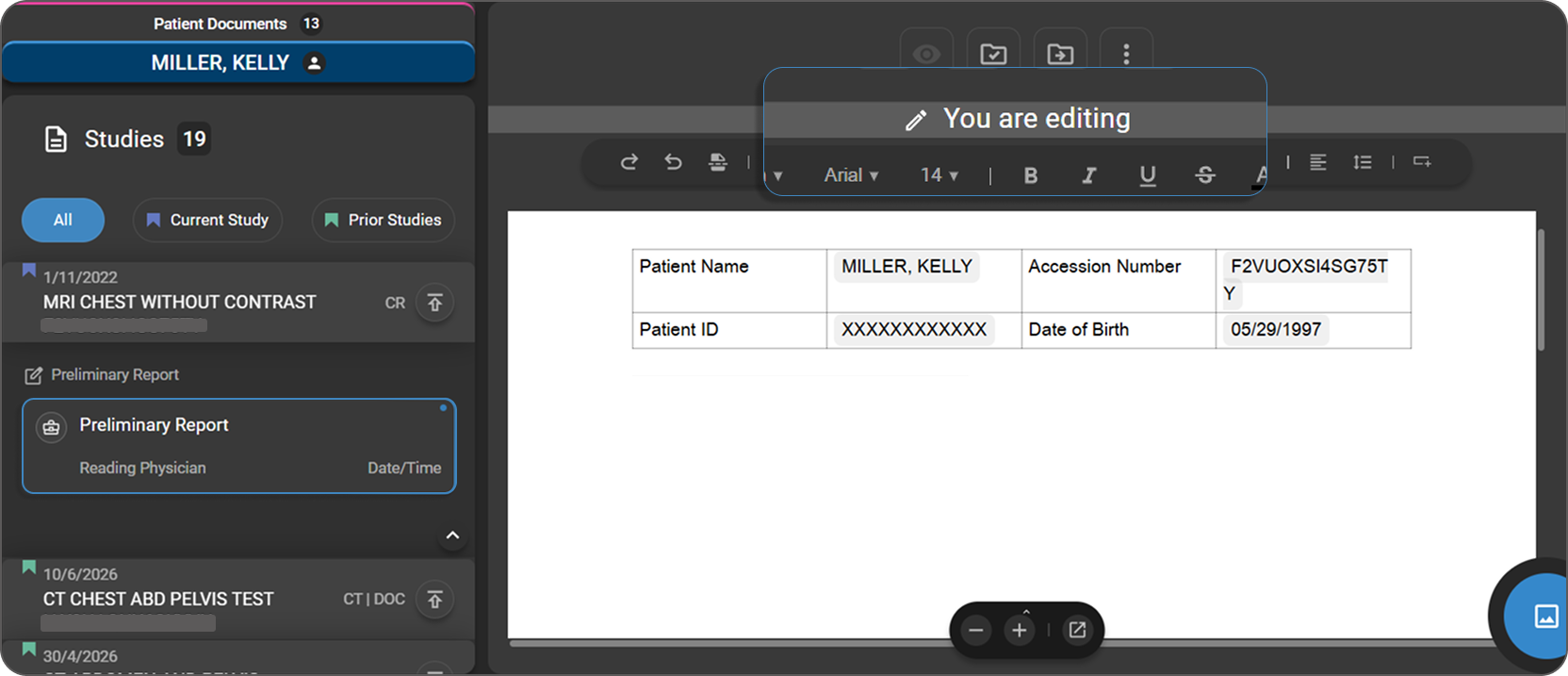
For the active editor:
- The banner displays a pencil icon and You are editing.
- The full editing toolbar is available in the viewport.
For other users viewing the same report:
- The banner displays [Editor Name] is editing with a lock icon.
- The active editor's name and avatar appear in the top right corner of the viewport.
- A lock icon appears on the report card in the Document Explorer.
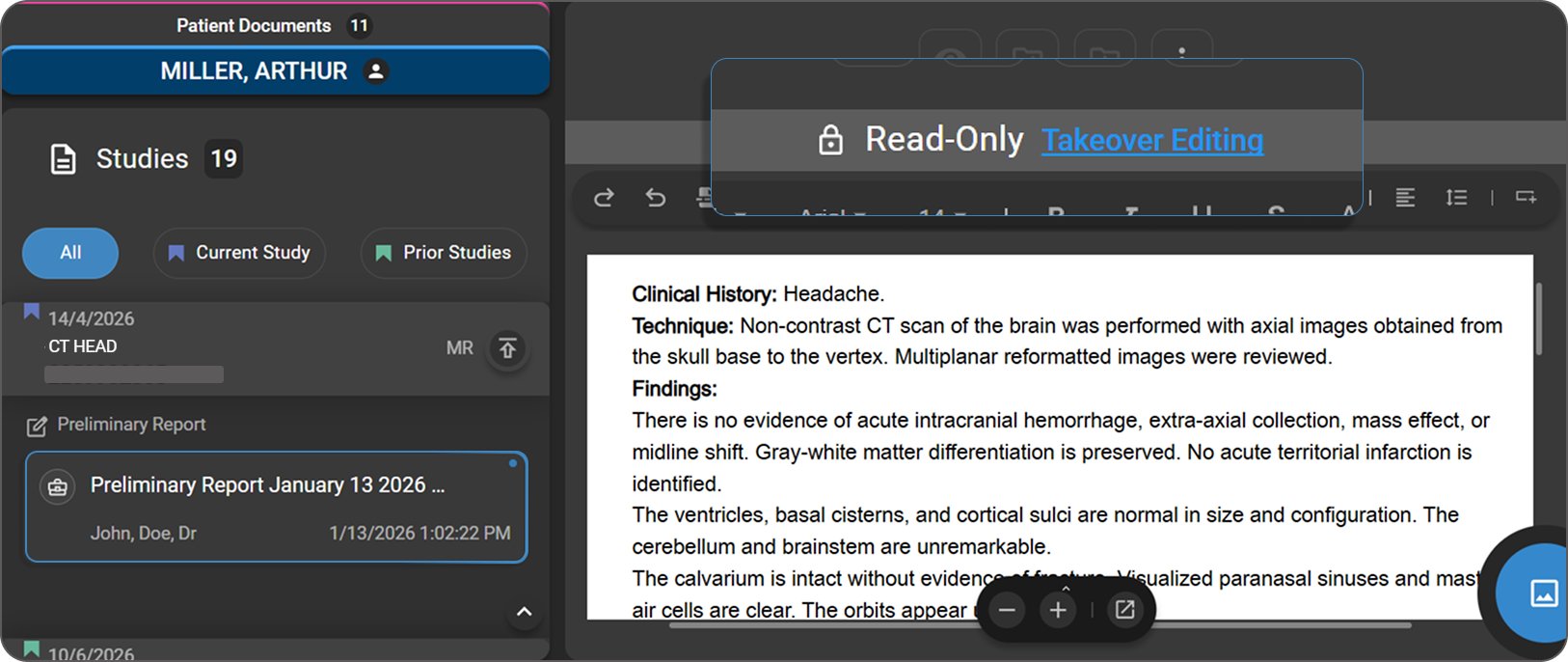
- All editing tools are hidden and the report is shown in read-only mode.
Automatic Unlock
The report lock is released automatically in the following situations:
- The active editor is inactive for 5 minutes.
- The active editor exits the study or closes the browser.
Once unlocked, the report becomes available for another user to take over.
Taking Over a Report
While the report is actively locked:
The report is shown in read-only mode. You cannot edit until the active editor exits or becomes inactive.
After the report is unlocked due to inactivity:
A Takeover Editing link appears in the banner. Click it to assume editing access.
Note: Only users with permission to create and update reports can take over editing. Referring Physicians do not have access to create, update, or take over reports.
Note: If the Takeover Editing link appears unexpectedly when opening a report, refresh the page or reopen the study.
Report Ownership Transfer in MD.ai
Note: This feature applies only to users whose reporting workflow uses the MD.ai editor.
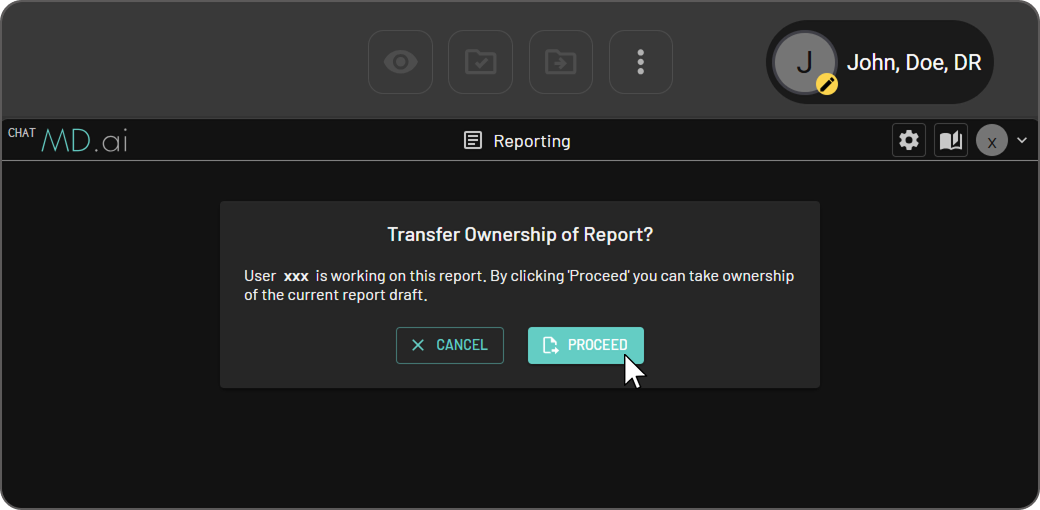
When two users open the same report in the MD.ai reporting editor, a Transfer Ownership of Report? dialog appears, prompting the second user to either take ownership or leave the report with the current editor.
- Click Proceed to take ownership. The report opens for editing and the previous editor receives a Report Transferred notification.
- Click Cancel to leave the report with the current editor.